About
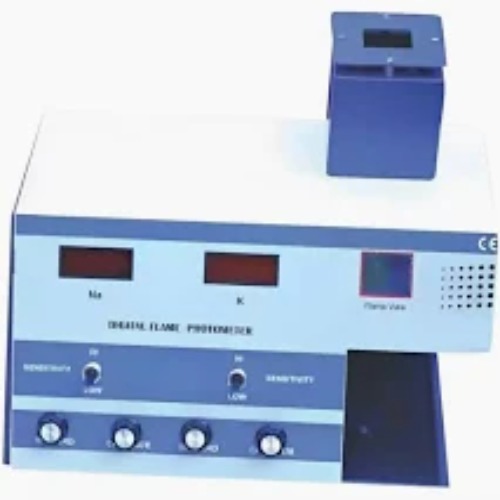
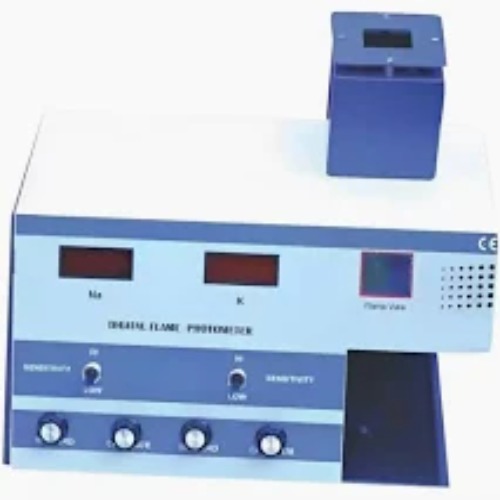
we provide high-quality laboratory equipment, precision instruments, and durable plastic ware to support scientific research and innovation. Our products are designed to meet the needs of modern laboratories, from academic to industrial settings. We offer a wide range of tools including microscopes, centrifuges, pipettes, and analytical balances. Our plastic ware collection features reliable and chemical-resistant items like test tubes, petri dishes, and storage containers. Each product is carefully sourced and tested to ensure accuracy, safety, and performance. With a focus on affordability and customer support, we are committed to helping your lab succeed.Precision Measurement and SensitivityAchieve accurate results with a measuring range of 0-100 ppm for sodium and potassium, and a minimum sensitivity of 0.5 ppm. The photometer ensures data reliability across biological, soil, and chemical samples, supporting robust laboratory analysis.
Robust Design and User SafetyThe flame photometer's durable stainless steel and mild steel construction is complemented by safety features such as automatic gas cut-off and overheat protection, ensuring consistent performance and operator safety under varying lab conditions.
Versatile Applications and Easy OperationDesigned for the determination of Na, K, Ca, and Li in a range of sample types, this instrument features a digital LED display, direct calibration, and a filter change-over switch, making it both versatile and user-friendly for diverse laboratory workflows.
FAQ's of FLAME PHOTOMETER:
Q: How do I calibrate the flame photometer for accurate readings?
A: Calibration is performed directly with standard calibration solutions for the desired ion (Na, K, Ca, or Li). Simply follow the stepwise calibration instructions in the user manual to ensure your readings reflect the true concentration of your samples.
Q: What range of samples can be analyzed with this flame photometer?
A: The instrument is suitable for analyzing sodium, potassium, calcium, and lithium concentrations in biological fluids, soils, fertilizers, and similar sample matrices, making it ideal for agricultural, clinical, and research laboratories.
Q: When should I use the aspiration rate control feature?
A: Adjust the aspiration rate control to regulate the sample uptake between 5-6 ml/min, optimizing it according to sample viscosity and concentration to maintain measurement accuracy and efficient nebulization.
Q: Where is analog data output useful in the analysis process?
A: The analog output allows connection to an external recorder, making it useful for generating continuous data logs, chart recordings, or integrating into data acquisition systems for in-depth analysis and record-keeping.
Q: What are the benefits of the interchangeable optical filter system?
A: Interchangeable filters enable rapid switching between different target ions (Na, K, or optional elements), thereby enhancing analytical versatility and allowing multi-element detection without needing multiple instruments.
Q: How does the safety system protect laboratory personnel during operation?
A: Automatic gas cut-off and overheat protection are incorporated to prevent gas leaks and accidental overheating, ensuring both the operator's safety and the integrity of the instrument during routine and extended use.
Q: What is the process for switching between sodium and potassium analysis?
A: Switch between sodium and potassium detection by changing the respective optical filters and recalibrating with standard solutions. The filter change-over switch and direct calibration process streamline this adjustment for efficient operation.