About
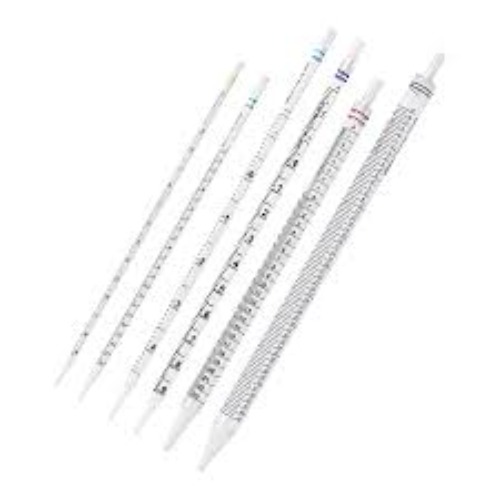
we provide high-quality laboratory equipment, precision instruments, and durable plastic ware to support scientific research and innovation. Our products are designed to meet the needs of modern laboratories, from academic to industrial settings. We offer a wide range of tools including microscopes, centrifuges, pipettes, and analytical balances. Our plastic ware collection features reliable and chemical-resistant items like test tubes, petri dishes, and storage containers. Each product is carefully sourced and tested to ensure accuracy, safety, and performance. With a focus on affordability and customer support, we are committed to helping your lab succeed.Accurate Liquid Measurement & TransferSerological pipettes are engineered for precise measurement and transfer of liquids. Their finely calibrated graduations and color-coding ensure clear volume identification and accuracy in lab workflows, supporting cell culture, clinical diagnostics, and research procedures efficiently.
Versatile and Convenient OptionsChoose from sterile (gamma or EO treated) or non-sterile variants, with cotton-plugged or non-plugged designs, to suit your workflow requirements. Available as reusable borosilicate glass or disposable polystyrene, serological pipettes are offered individually wrapped or in bulk packs for optimal convenience.
Superior Material & ComplianceManufactured from borosilicate glass or medical-grade polystyrene, these pipettes are chemically resistant and can tolerate high temperatures, with glass models being autoclavable. Compliance with international standards ensures consistency and safety in every application.
FAQ's of Serological pipette:
Q: How do I select the right serological pipette size for my application?
A: Select a pipette with a capacity closest to your desired transfer volume (e.g., 1ml, 2ml, 5ml, 10ml, or 25ml) and check the graduation increments for precise dispensing. Color bands or printed text on the pipette help with quick size identification.
Q: What is the difference between sterile and non-sterile serological pipettes?
A: Sterile pipettes are gamma-irradiated or EO-treated, ensuring they are free from contaminants and safe for sensitive procedures such as cell culture or clinical work. Non-sterile pipettes are suitable for non-critical applications or when sterilization will be performed in-house.
Q: When should a cotton-plugged serological pipette be used?
A: Cotton-plugged pipettes are used primarily to prevent liquid from entering the pipette controller, reducing contamination risks. They are especially recommended for microbiology or tissue culture applications where sterility is essential.
Q: Where can serological pipettes be used?
A: Serological pipettes are suitable for laboratory, clinical, research, and industrial settings, including cell culture, reagent preparation, sample dilution, and other liquid handling processes.
Q: What materials are serological pipettes made from, and what are their benefits?
A: They are made from either borosilicate glass (reusable, autoclavable up to 121C) or medical-grade polystyrene (disposable, chemically resistant). Both materials ensure accuracy and compatibility with common laboratory acids and bases.
Q: How do the graduation markings contribute to accuracy during usage?
A: The graduated markings, tailored to specific volume increments, facilitate precise measurement and controlled dispensing, ensuring reliable results in quantitative experiments.
Q: Are reusable serological pipettes autoclavable, and what is the process?
A: Reusable borosilicate glass serological pipettes can be autoclaved at up to 121C, allowing safe sterilization between uses. Prior to autoclaving, ensure the pipettes are cleaned according to lab protocol.