About Polypropene Black Serological Plates
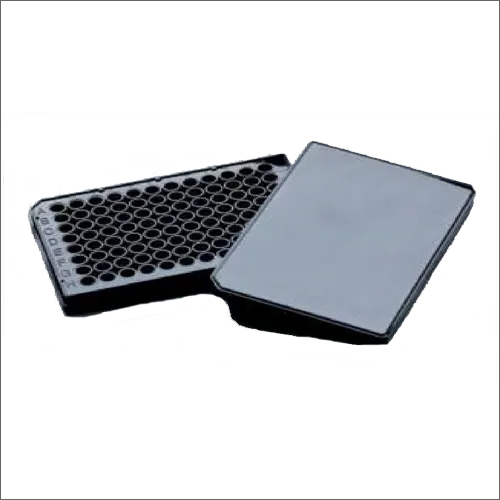
Polypropylene black serological plates by Maxome are made using optically clear polystyrene for good visualization. These plates are needed in labs for basic analysis, serological dilution and other applications. Each plate has a fixed flat bottom and an alphanumeric well coding. The well surface of the serological plates is smooth and uniform. This kind of plate can also be used for storing patient samples in hospital labs for diagnostics. It can also store active agents for a longer time period. Each plate has uniform well-to-well spacing. The polypropylene black serological plates are chemical and temperature resistant. The biologically inert and solvent resistant serological plates can be easily sealed due to the elevated well walls.
| Material | PP |
| Capacity | 96 Well |
| Shape | Rectangular |
| Usage/Application | Chemical Laboratory |
| Color | Black |
| Country of Origin | Made in India |
| Brand | Maxome |
Precision-Crafted for Laboratory PerformanceDesigned with 96 U-bottom wells and made from polypropylene, these black serological plates offer reliability and consistency in laboratory assays. Their robust construction and compatibility with universal lids make them an essential tool for diverse chemical or microbiological applications.
Enhanced Utility With Autoclavable and Stackable DesignThese plates are easily stackable, optimizing storage space within laboratory environments. Their resistance to a broad temperature range, from -20C to +121C, and autoclaving capabilities ensure they support both sterile and non-sterile workflows for repeated use.
Tailored for Fluorescence and Light-Sensitive ApplicationsThe black, opaque color prevents interference from stray light, providing optimal assay conditions for fluorescence and other light-based measurements. Non-treated surfaces allow further customization for specialized experimental needs.
FAQ's of Polypropene Black Serological Plates:
Q: How can I sterilize the Polypropene Black Serological Plates for reuse?
A: These plates can be easily sterilized through autoclaving at temperatures up to +121C, allowing them to be used safely in sterile laboratory workflows after cleaning.
Q: What kind of assays are these plates suitable for in the laboratory?
A: The plates are ideal for both microbiology and chemistry assays, particularly those that are sensitive to light, such as fluorescence measurements, due to their opaque black color.
Q: When should I choose a U-bottom well design?
A: U-bottom wells are beneficial when efficient mixing, easy retrieval of samples, or uniform cell pellet formation is desired during centrifugation or other laboratory processes.
Q: Where can these serological plates be used?
A: They are suitable for chemical laboratories, research centers, and microbiology or biochemistry labs requiring high-quality plates for routine or specialized assays.
Q: What is the maximum volume each well can accommodate?
A: Each well in the plate can hold up to 350 l, making them suitable for a wide range of laboratory sample volumes.
Q: Are these plates compatible with standard universal lids?
A: Yes, they are designed for compatibility with universal lids, ensuring secure sample protection and minimizing contamination risks during experiments.
Q: What are the benefits of using black, non-treated, polypropylene plates?
A: Black plates reduce light interference, ideal for fluorescence assays, while the non-treated, chemical-resistant polypropylene ensures versatility, durability, and suitability for a range of applications.
 Send Inquiry



 Send Inquiry

 Send Inquiry


